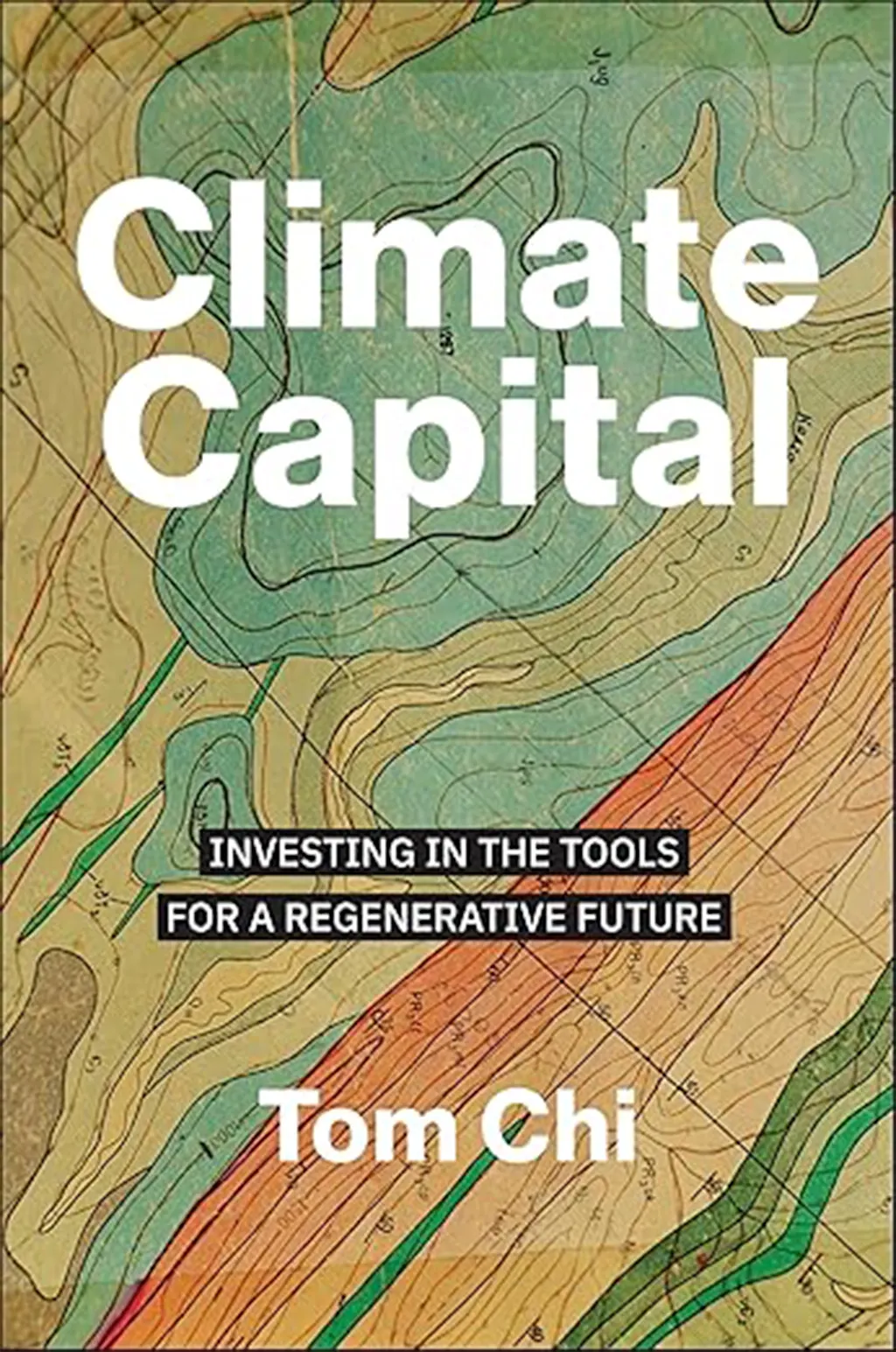
The following is an excerpt from an article of a Q&A with Tom Chi, Founding and Managing Partner of At One Ventures.
Google X founding member Tom Chi says our climate, tech, and economic systems are breaking. His new book shows entrepreneurs how to regain agency in an unstable century.
I’m a physicist by training and an engineer by practice. I build things that have to work in the real world — hardware, software, and systems that collide with physical reality, rather than abstractions. Over the last few decades, I’ve worked on technologies that materially changed how people live and work, including Microsoft Office, web search, the early social web, and self-driving cars at Waymo.
In building first-of-a-kind systems, I’ve made real mistakes. I’ve seen where the theory stops working, where incentives bend behavior in unexpected ways, and where systems behave nothing like the models predict. Over time, those lessons add up to something useful: a practical boundary between what sounds plausible in abstraction and what’s achievable in practice.
I’ve also spent much of the last decade outside the usual Silicon Valley bubble, living and working extensively in the Global South and in ecological systems under stress. That distance matters. It makes certain assumptions visible that otherwise remain invisible when you’re deeply embedded in a single economic or cultural reality.
This book comes from seeing recurring failure modes across technology, climate, and economics, and recognizing that the root problem is often not lack of effort or intelligence, but broken framing. I wrote this book because I’ve seen those frames fail up close, and I’ve seen how to make alternatives work.
I’m trying to address a deeper problem than any single crisis. We are facing overlapping breakdowns: climate destabilization, technological disruption, economic fragility, and social fragmentation. And our dominant theories of change are not keeping pace with the scale or speed of what’s unfolding. Many of our systems — climate, markets, media, institutions — are failing because they were designed for stability and incremental change, not for accelerating extremes and feedback loops.
At the same time, our responses are often stuck in narrow lanes: politics that reset every election cycle, science that explains problems without enabling action, and markets that optimize for short-term signals while eroding long-term viability. None of these are sufficient on their own.
The problem this book tries to solve is how people regain agency in a destabilizing century. How do we develop the skills to see systems clearly, intervene wisely, and build solutions that actually hold up over time? This is not a book about predicting the future. It’s about building the cognitive and ethical capacity to respond well, even when the future is volatile and uncertain.
Entrepreneurs are system designers, whether they realize it or not. Every business embeds assumptions about value, incentives, labor, resources, and impact. The most relevant lesson for entrepreneurs is that, while businesses must prioritize linear business outcomes, durability does not come only from linear optimization — it comes from better, more creative system design.
Many founders know how to serve customers and improve products incrementally. Fewer step back to ask whether the systems they are building reinforce the problems they aim to solve. This book offers frameworks for critical thinking that help distinguish local success from global harm, short-term traction from long-term viability.
Another core lesson is that not everything should be treated as capital. When entrepreneurs unconsciously flatten people, attention, or nature into resources to be optimized, they often create hidden liabilities that surface later as burnout, backlash, or ecological cost. Businesses that last tend to respect constraints that markets alone do not enforce.
Ultimately, entrepreneurship at its best is about creating solutions that are the “highest and best” response to a real need — not just profitable, but stabilizing and generative. The tools in this book are meant to help founders design businesses that serve customers while also serving humanity, without relying on vague mission statements or wishful thinking.
Right now, the most important principle to focus on is critical thinking grounded in compassion — especially in the age of AI. As AI systems take over more repetitive cognitive labor, the uniquely human role is not speed or scale, but judgment. Humans decide what problems matter, what outcomes are acceptable, and where systems should not go. Without strong critical thinking, we risk outsourcing not just tasks, but responsibility.
At the same time, our cognitive resources are being actively depleted. Much of today’s media and advertising economy is built on extracting attention rather than supporting understanding. This creates what I think of as cognitive despoiling — an erosion of our ability to think clearly, focus deeply, and act intentionally. The response isn’t to reject technology, but to rebuild human-first cognitive infrastructure. That means designing tools, businesses, and institutions that preserve agency rather than undermine it. Compassion matters here because systems built without regard for human limits inevitably exploit them, whether intentionally or not.
If we get this right, AI becomes an amplifier of human wisdom. If we get it wrong, it accelerates fragmentation and loss of agency. And that’s why this principle matters more now than ever.
To me, innovation is not about having ideas, it’s about putting something into the world and letting reality respond, often by failing. Creativity is the skill that makes this possible. Critical thinking helps us see where existing frames are broken, but creativity is what allows us to rebuild after that break. Once you start building, abstraction disappears. You quickly learn which parts of your thinking don’t hold up, and that feedback — especially where things fail — is the raw material of real innovation.
We live in a culture where ideas travel fast and feel powerful, but most ideas that sound good don’t work. The creative process humbles you in ways arguments never will. People who are actually innovating can always say where their idea worked the worst, because that’s where the learning lives. Failure isn’t the opposite of innovation; it’s how you gain the specificity needed to improve what you’re building.
This book shows how to move from ideas to action through concrete creation — breaking frames, prototyping early, observing what actually happens, and iterating from there. The goal is to rebuild creative literacy so more people can move out of abstract debate and into the solve. That’s where agency returns, and that’s where meaningful change actually begins.