Latin America has more than 650 million people and a rapidly growing smartphone and electronic device market. But for many consumers, a new iPhone or Samsung flagship can cost more than two months of salary.
Used phones should fill that gap, but the market today is largely informal. More than 80% of secondhand phone transactions in the region happen without certification, warranty or much trust. At the same time, OEMs and retailers generate large volumes of trade-ins but lack the infrastructure to efficiently refurbish and resell those devices.
The environmental opportunity is equally large. Electronics are extremely resource-intensive to manufacture, and most of a smartphone’s environmental footprint happens before it is ever turned on. Yet millions of perfectly usable devices are replaced every year, left in drawers or ultimately become e-waste. Extending the life of those devices is one of the simplest ways to reduce the need to manufacture new ones, avoiding the associated raw materials, water use and emissions.
Reuse is building the infrastructure to efficiently refurbish and resell those devices.
Founded in Santiago in 2018 by childhood friends Max Sateler and José Tomás Ulloa, Reuse manages the entire lifecycle of a used electronic device: trade-in, pricing, refurbishment, certification, warranty and resale.
The result is that consumers get access to premium smartphones, tablets, computers, and video game consoles at much lower prices, OEMs and retailers get a turnkey trade-in program that helps them sell more new devices, and electronic devices stay in use for longer instead of becoming e-waste.
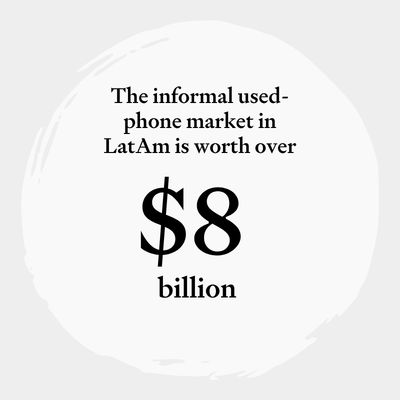
"The informal used-phone market in LatAm is worth over $8 billion and nobody was doing it right. We decided to build the infrastructure that makes it formal, certified, and scalable." Max Sateler, Co-Founder & Co-CEO, Reuse
Most re-commerce companies focus on one piece of the value chain: buying electronic devices, repairing them or reselling them. Reuse does all three, with its software connecting the entire process.
Imagine a customer buying a new smartphone at a Samsung store or MacStore. At checkout, they can trade in their old phone. Reuse’s software photographs the device, grades it using computer vision and AI, and gives the customer a price in less than five minutes. The customer receives cash or a voucher, and Reuse receives the phone.
The device is then sent to one of Reuse’s refurbishment centers in Santiago, Mexico City or Lima. It is wiped, tested across 37 criteria, repaired if necessary, certified and prepared for resale. It takes about eight days to get a device ready for sale and less than 45 days, on average, to put it in the hands of a new owner.
One of the most interesting parts of the business is the pricing engine. Reuse doesn’t simply look at what competitors are willing to pay for a phone. It starts with what it expects the phone to sell for, subtracts refurbishment and operating costs, and calculates the maximum trade-in price it can offer while maintaining a minimum margin. That means pricing also controls supply. If Reuse already has too many iPhone 14s, for example, it lowers the trade-in price and fewer come in. If it needs more, it raises the price.
Reuse can therefore manage inventory before it even owns it, rather than buying too many devices and discounting them later.
"The pricing engine is also a supply throttle. If a model is oversupplied, we lower the trade-in offer and intake drops. If we need more of a specific device, we raise the price and supply flows in. We control inventory in real time, before we own it." José Tomás Ulloa, Co-Founder & Co-CEO, Reuse
The platform currently serves its integrated partners across 490+ point-of-sale locations. And because they use an API and no custom engineering is required, new partners can go live in weeks.
By 2027, Reuse plans to target 250,000+ devices processed per year across an expanding partner network that includes Samsung, Apple's authorized MacStore reseller network, Coppel, Falabella, Claro, and others.
Reuse achieved $30M of revenue in 2025, growing 88% year over year, and reached EBITDA profitability after raising only around $9M of equity capital. That is unusual for an inventory-heavy business and this was one of the things that impressed us most about Reuse.
A big part of this efficiency comes from the pricing engine described above. Reuse controls how many devices it buys, by model and geography, before committing capital.
The company has also fundamentally changed where its phones come from. In 2023, around 75% of its inventory was imported. By the end of 2025, 73% was sourced locally through trade-in partnerships. That reduced the cash-conversion cycle from approximately 88 days to 40 days and significantly reduced foreign-exchange exposure.
The working-capital structure is also attractive. For some trade-in partners, Reuse has around 60 days to pay for devices, while inventory turns in approximately 45 days. In other words, Reuse can sometimes sell a phone before it has to pay the partner that supplied it.
For consumers, the economics are equally clear. Refurbished devices typically sell for 28–30% less than an equivalent new phone and come with a 13-month warranty and after-sales support. Around 22% of Reuse customers report that they could not otherwise afford a new device.
This is important to our investment thesis: Reuse does not need consumers to pay a green premium. The environmentally better product is also the cheaper product.
Electronics manufacturing is one of the most resource-intensive industrial processes on earth. A single smartphone requires approximately more than 70 raw materials and more than 50 metals and generates 55kg of CO₂e to produce.
Extending the life of an existing phone therefore avoids much of the impact associated with manufacturing a new one, while also keeping usable electronics out of landfill.
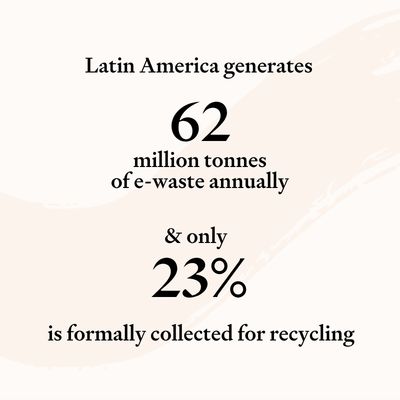
The opportunity is significant. The world generates around 62 million tonnes of e-waste every year, but only about 22% is formally collected. Latin America is even earlier in the development of a formal re-commerce market: refurbished devices represent only around 3% of electronics sales, compared with 20–25% in the US and Europe.
Every device Reuse refurbishes and resells displaces the need for a new one and diverts it from a landfill. Since 2023, each quarter it has diverted 40,000+ kg of e-waste from landfills. Cumulatively, the impact has been:
Reuse is a Certified B Corporation and holds R2v3 certification, the international standard for responsible electronics repair, refurbishment, and recycling, covering traceability, data security, environmental safety, and worker health. It is the only re-commerce operator in Latin America to hold both certifications simultaneously.
Beyond the environmental numbers, Reuse is creating economic opportunity. The company has generated 52 jobs in Mexico since entering the market, created youth employment pipelines, and advances digital inclusion by putting certified, warrantied, premium devices into the hands of consumers who would otherwise be shut out of the formal technology market.
Reuse generated $30M of revenue in 2025, up 88% year over year. Q1 2026 revenue reached $10.2M, representing approximately 104% year-over-year growth.
The company currently operates in Chile, Mexico and Peru, with further expansion across Latin America planned.
One of the clearest examples of the value Reuse provides is MacStore, Apple’s premium authorized reseller in Mexico. After MacStore moved its trade-in program to Reuse, trade-in GMV increased approximately 4.8x. The trade-in rate also increased significantly, meaning many more customers started using their existing phones to help finance the purchase of new ones.
This is exactly why OEMs and retailers care about Reuse: trade-in isn’t just about getting used phones. It helps them sell more new phones.
Reuse now works with 14 active partners across more than 490 points of sale, with more than 60 additional partners in its pipeline. No active partner has churned to date.
Its partners include Samsung, MacStore, Coppel, Falabella and Claro. Reuse also sells directly to consumers through its own e-commerce channels, which attract more than 800,000 monthly visits.
Max Sateler and José Tomás Ulloa have known each other since they were five years old. They co-founded Reuse at 22, while still in college in Santiago, and got started by importing used devices from the US.
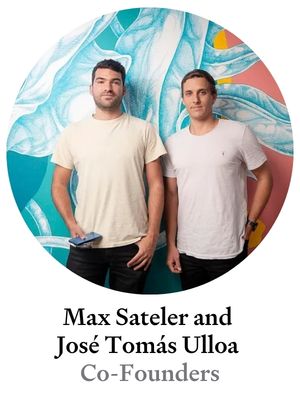
Both are 2026 Endeavor Entrepreneurs, a recognition that positions Reuse among Latin America's most high-potential technology companies.
The executive team behind them is strong:
The company is previously backed by Seaya Cathay Latam, Dalus Capital, IGNIA VC, and Silence VC.
“The used-device market in Latin America is enormous, and most of it is still informal: no certification, no warranty, no trust. Max and José Tomás have spent almost a decade building the infrastructure to change that. What impressed us most is how efficiently they have done it: ~$30M of revenue, positive EBITDA and only ~$9M raised. The better this business performs, the more electronics stay in circulation and the fewer new devices need to be manufactured. That combination of strong economics and environmental impact is exactly what we look for at At One.” — Laurie Menoud, Partner, At One Ventures


.jpg)